
English Grammar in Order: A Learning Path from A1 to B2, with a Story for Every Step

An English grammar learning path takes one grammar point at a time, in an order that builds: first the present simple, then the past, then the future, conditionals and the passive. Here is our path through the order to learn English grammar from A1 to B2, in 24 steps. Each step is practised in a short story written to teach it, 8 to 21 minutes long: an audiobook narrated in British English with the text on screen, and an ebook with a short guide to the story’s grammar, with examples and a quick check with answers.
Start at your level, and take the steps in order. Stories are from $0.99, and each one has a free sample to listen to before you buy. Jump to: All 24 steps · A1 · A2 · B1 · B2 · How to use the path
The 24 steps at a glance
| Step | Level | Grammar point | Story |
|---|---|---|---|
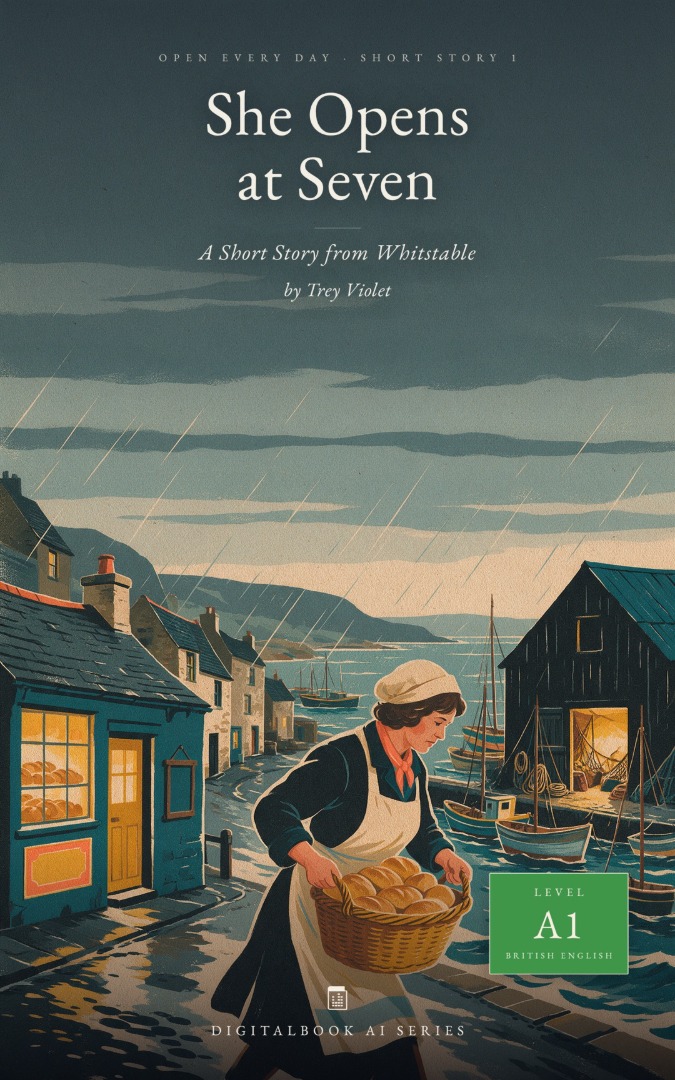
| 1 | A1 | The present simple | She Opens at Seven |
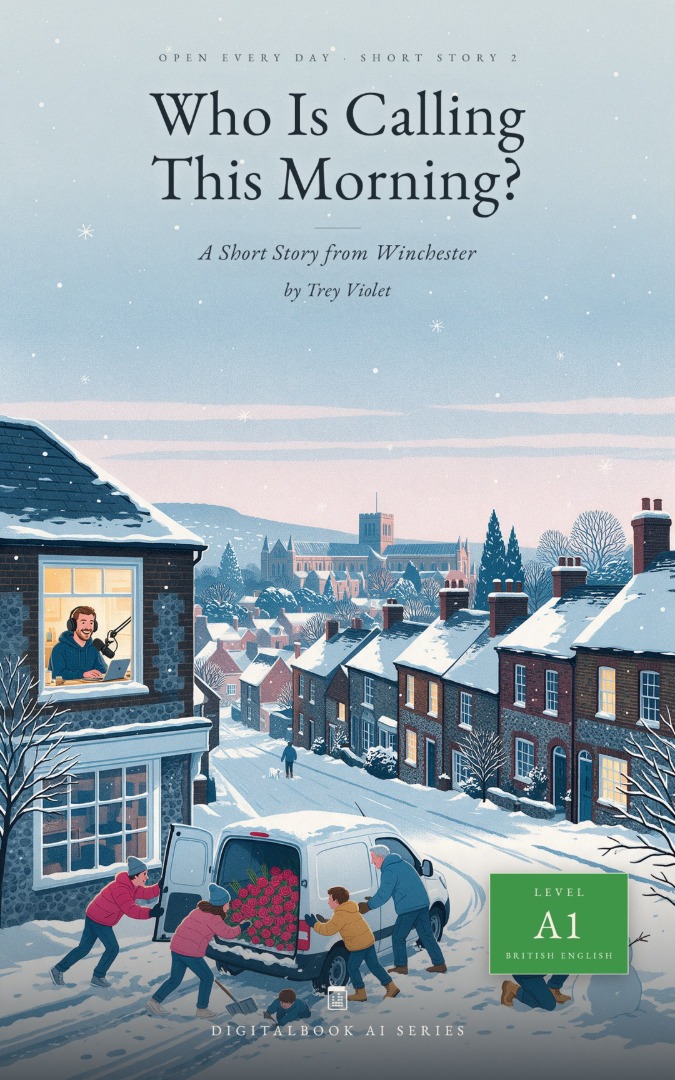
| 2 | A1 | The present continuous | Who Is Calling This Morning? |
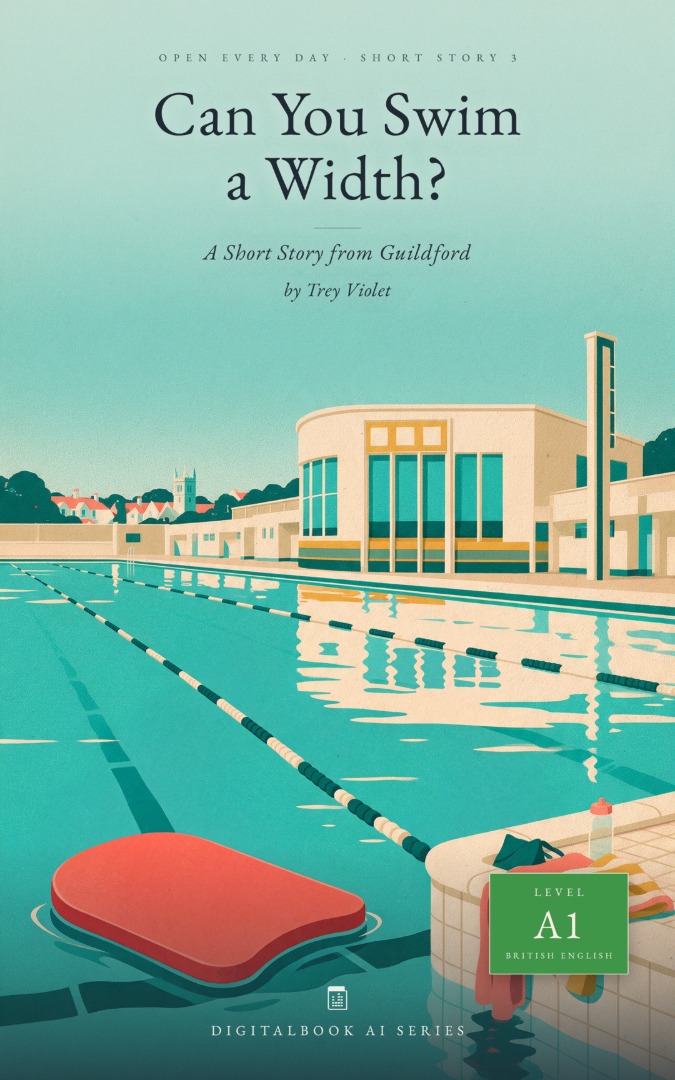
| 3 | A1 | can and can’t | Can You Swim a Width? |
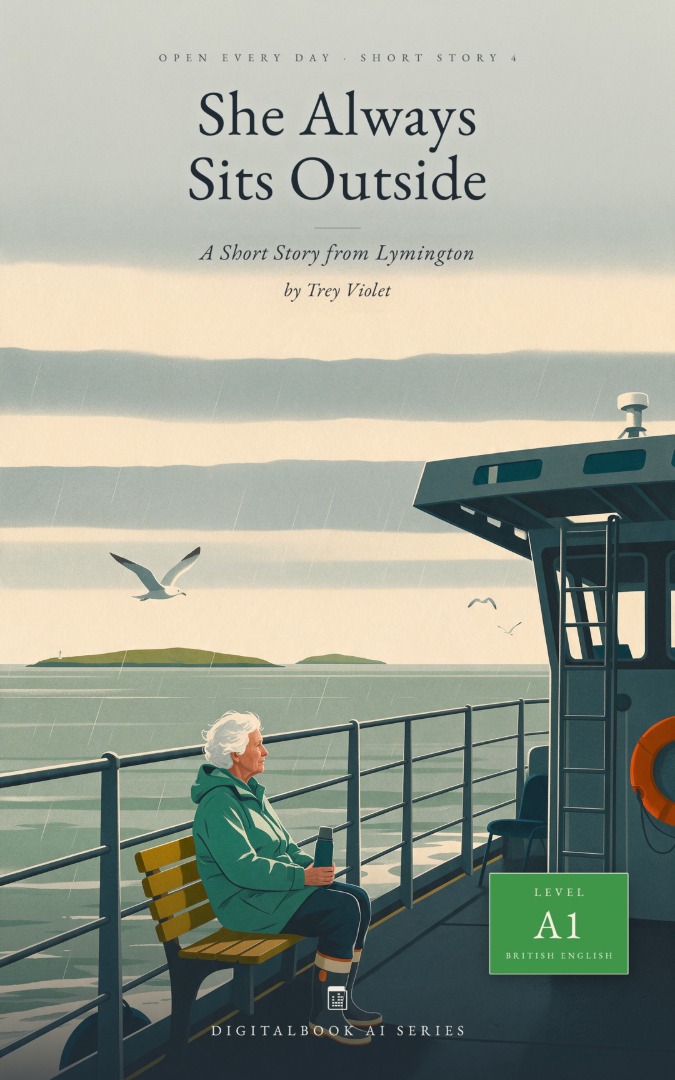
| 4 | A1 | always, usually, often, sometimes, never | She Always Sits Outside |
| 5 | A1 | some and any | Have We Got Any Eggs? |
| 6 | A1 | The past simple with irregular verbs | They All Told Him Something |
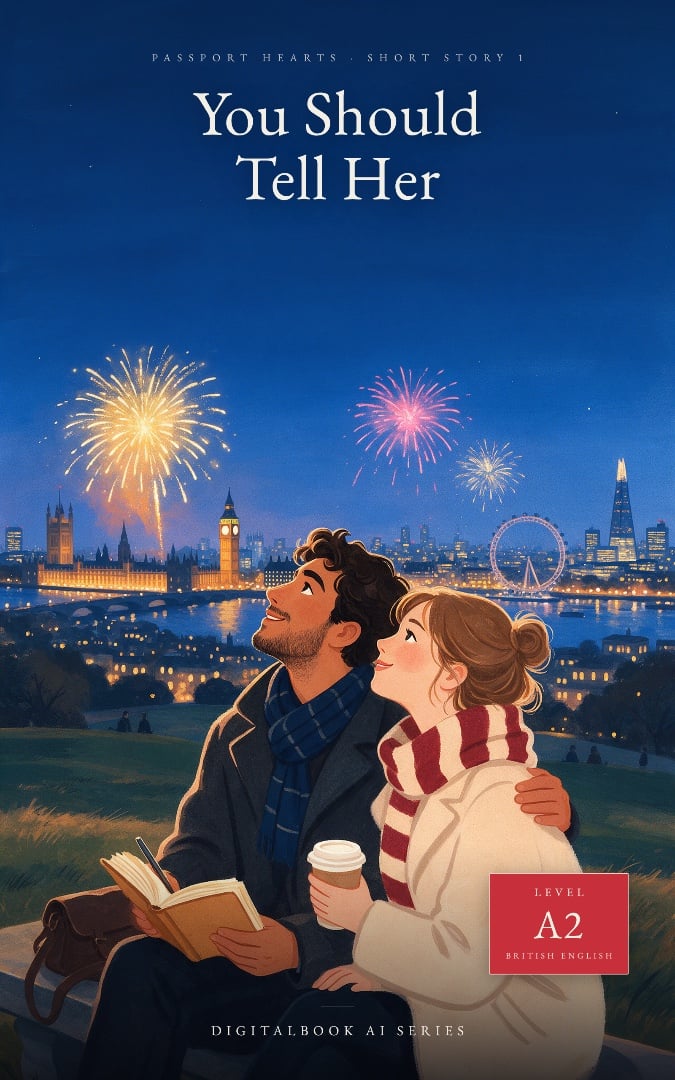
| 7 | A2 | should and shouldn’t | You Should Tell Her |
| 8 | A2 | will and might | It Might Snow at Midnight |
| 9 | A2 | Comparatives and superlatives | Colder than Manila |
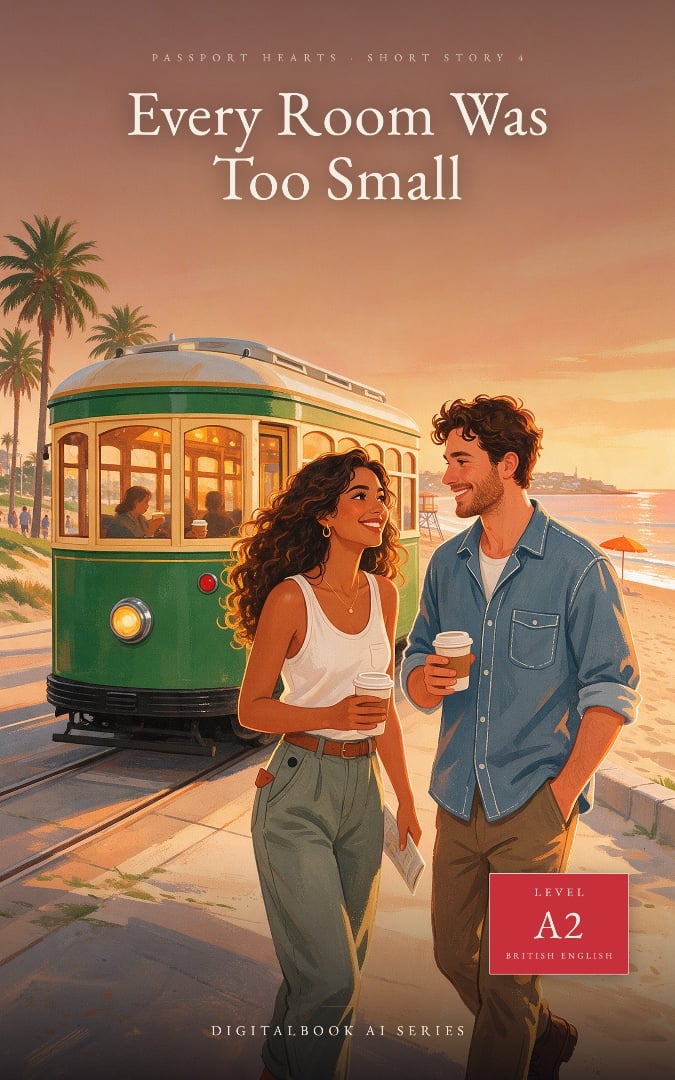
| 10 | A2 | too and enough | Every Room Was Too Small |
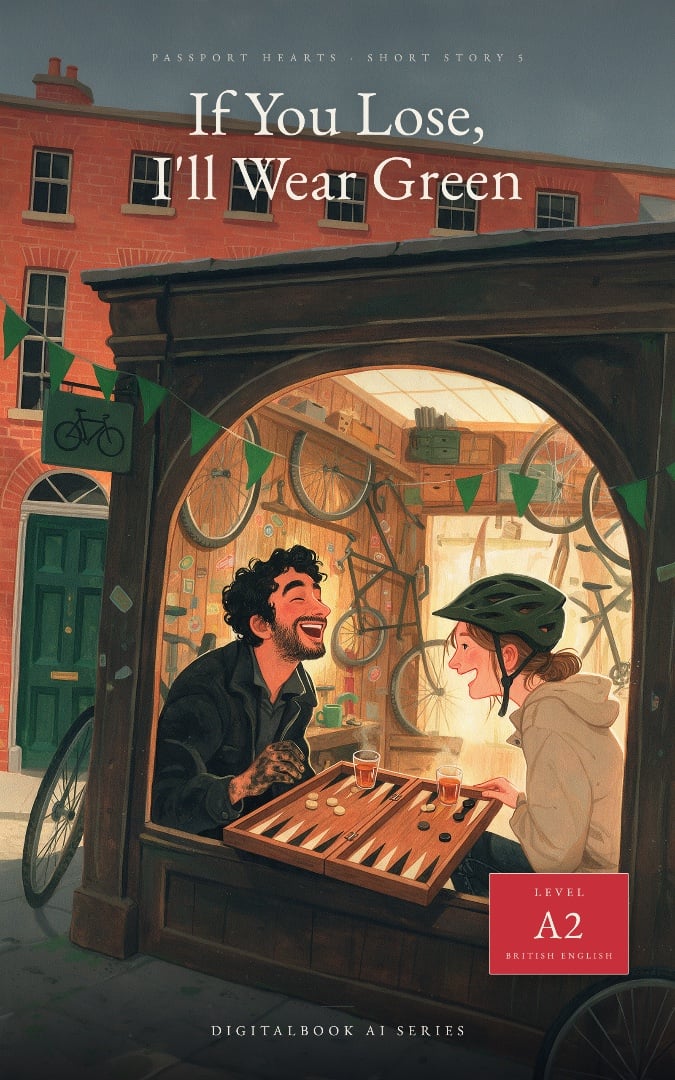
| 11 | A2 | The first conditional | If You Lose, I’ll Wear Green |
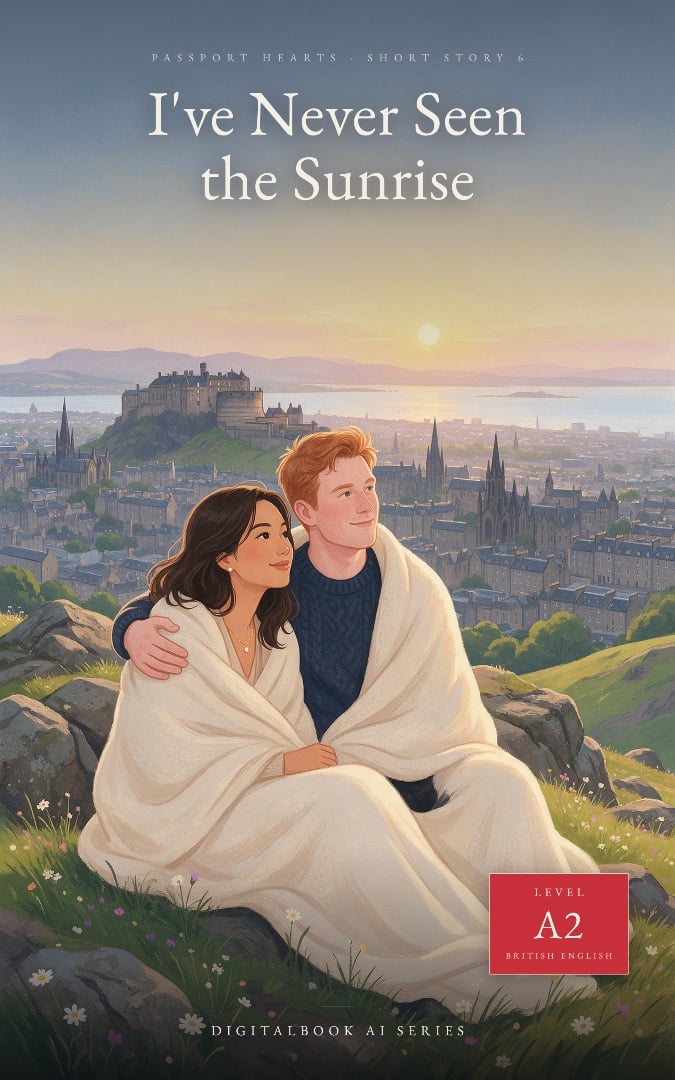
| 12 | A2 | The present perfect with ever, never, just, yet, already | I’ve Never Seen the Sunrise |
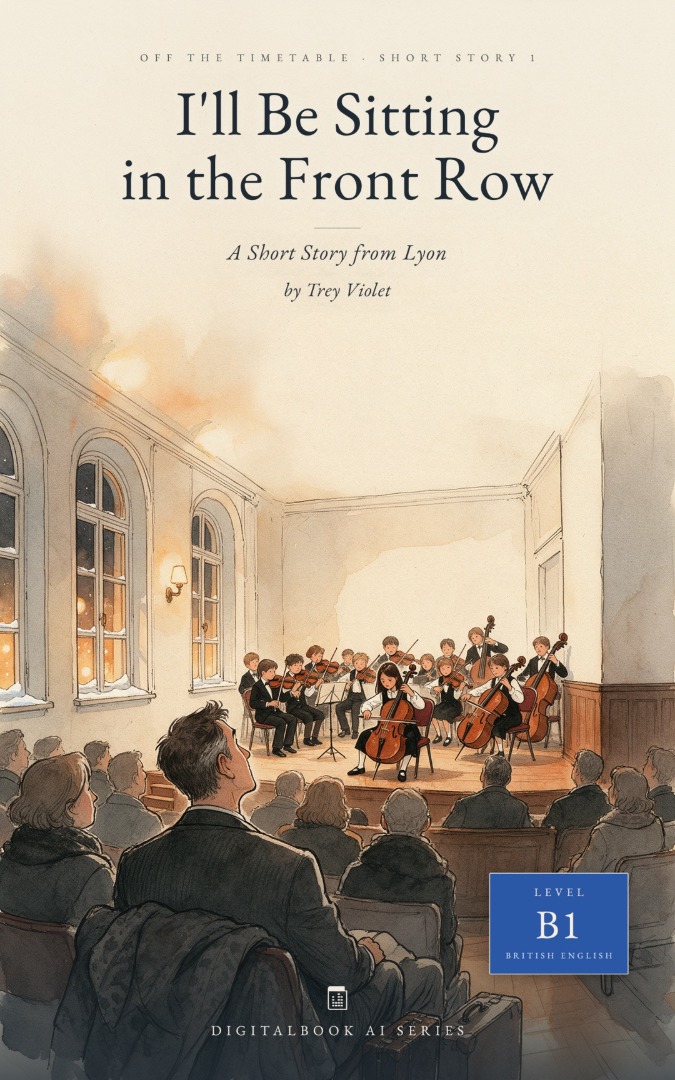
| 13 | B1 | Future forms | I’ll Be Sitting in the Front Row |
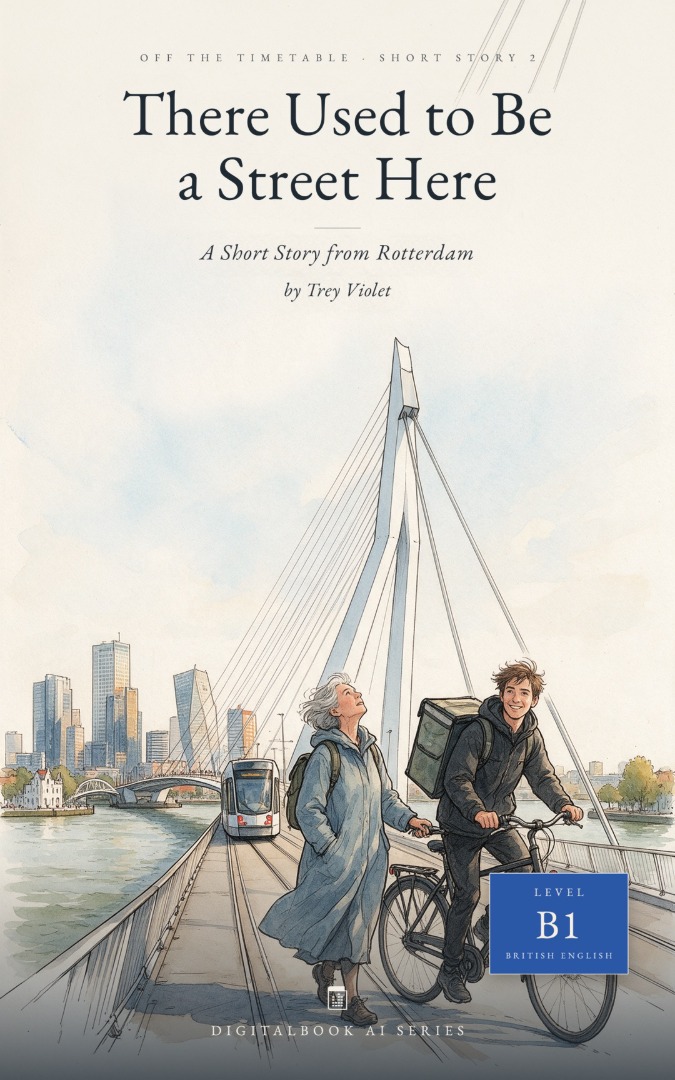
| 14 | B1 | used to | There Used to Be a Street Here |
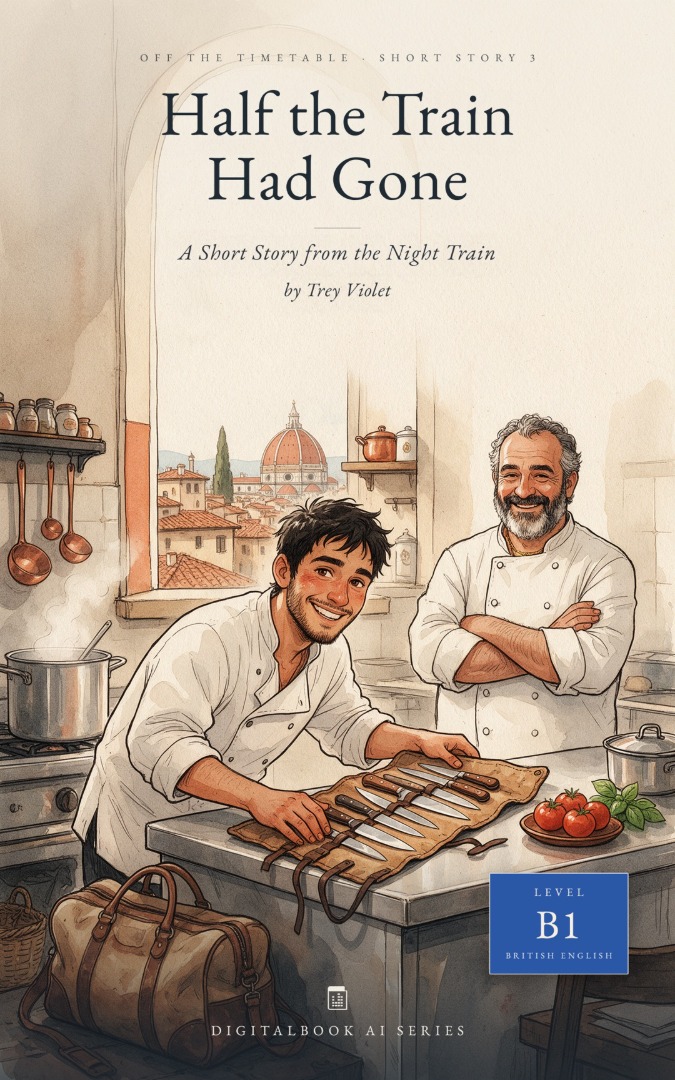
| 15 | B1 | The past perfect | Half the Train Had Gone |
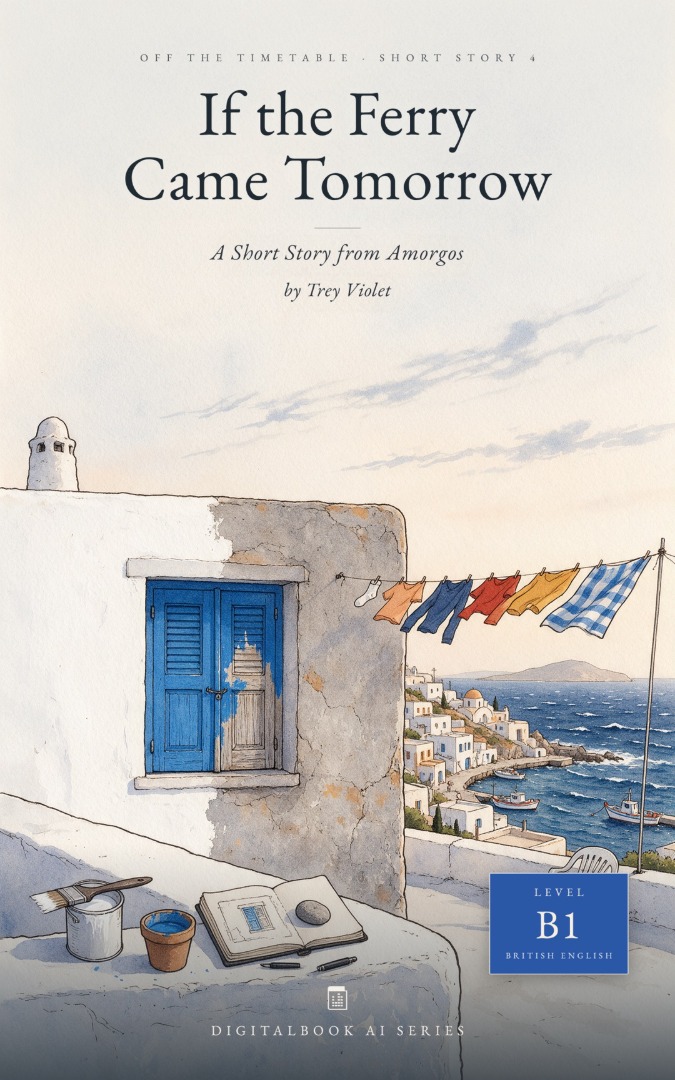
| 16 | B1 | The second conditional | If the Ferry Came Tomorrow |
| 17 | B1 | should have and shouldn’t have | I Should Have Charged It |
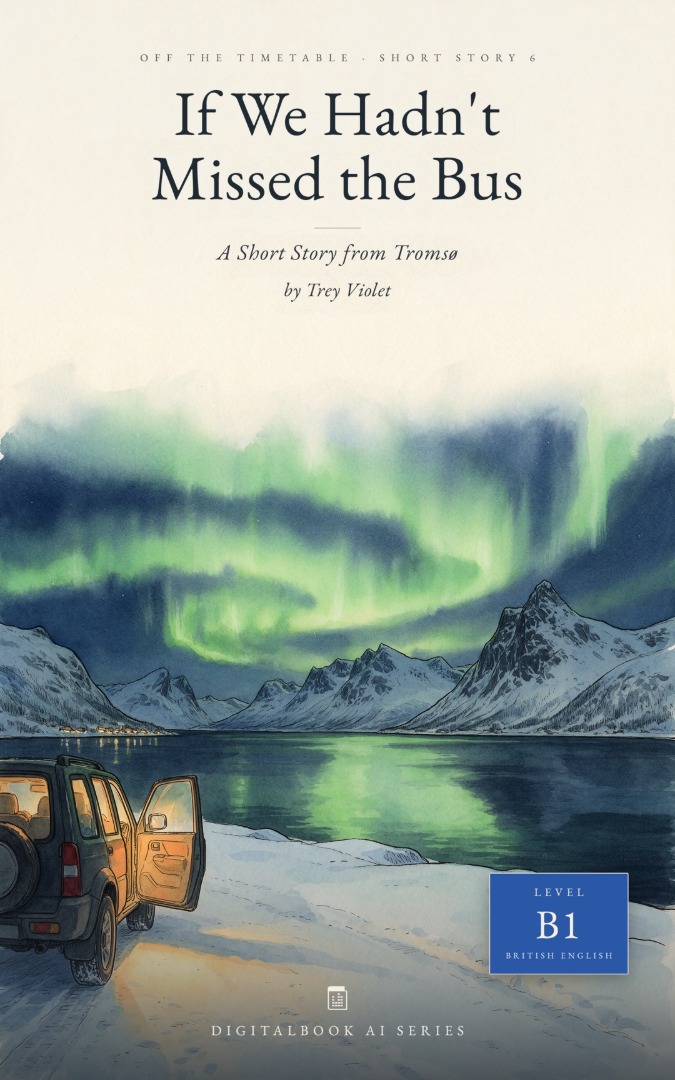
| 18 | B1 | The third conditional | If We Hadn’t Missed the Bus |
| 19 | B2 | can’t have, could have, must have been | It Can’t Have Been the Cat |
| 20 | B2 | The passive in all tenses | It’s Been Moved Again |
| 21 | B2 | stop, remember, try + -ing or to | He Always Stops to Listen |
| 22 | B2 | there’s no point, it’s no use, it’s not worth + -ing | There’s No Point Complaining |
| 23 | B2 | have something done | Who Has the Flowers Sent? |
| 24 | B2 | It’s said to… and other ways to hedge | It’s Said to Be Empty |
A1 grammar (beginner): steps 1 to 6
Start here if English is new to you. The six Open Every Day stories are about people at work, about eight minutes each, in very short sentences. Each story is $0.99 to listen and read, or $0.49 as an ebook.
Show steps 1 to 6 ▾
The present simple
For things people do every day, and things that are always true.
- Every day, Sandra gets up at four o’clock.
- Gus doesn’t like brown bread.
The present continuous
For things that are happening now.
- It’s six o’clock, and it’s snowing!
- We’re making tea for our street.
can and can’t
To say what people know how to do, or not.
- I’m sixty, and I can’t swim.
- I can walk in the water!
always, usually, often, sometimes, never
To say how often people do things.
- She always takes the nine o’clock ferry.
- She usually comes at ten to nine.
some and any
When we don’t say a number.
- We’ve got some rice.
- We haven’t got any meat.
The past simple with irregular verbs
For finished things in the past: yesterday, last year.
- I bought the last tree in the market.
- We ate a lot. I ate three mince pies.
Go further at A1
Ready for a whole book? Nobody Saw the Cake is a 45-minute café mystery with the A1 basics, including the present continuous and can. Nobody Asked Her Name practises steps 4 to 6 again, with how much / how many and questions with did.
A2 grammar (elementary): steps 7 to 12
New to A2? Start with The Blue Suitcase, a whole A2 novel you can listen to and read free: the past simple and continuous, going to, can and could, must. Then take the six Passport Hearts short stories, about 13 minutes each. Each story is $0.99 to listen and read, or $0.49 as an ebook.
Show steps 7 to 12 ▾
should and shouldn’t
To give advice.
- Of course you should tell her.
- You shouldn’t wait, Álvaro.
will and might
For predictions: will when you’re sure, might when you’re not.
- It might snow.
- No. It’ll snow. I’m sure.

Comparatives and superlatives
To compare two things (colder) or say which is the most (the coldest).
- Toronto is fifty degrees colder than Manila.
- Our traffic is the worst in the world.

too and enough
To say something is more than we want, or the right amount.
- It’s too small for a cat.
- My salary isn’t big enough for this room.
The first conditional
If + present, will + verb: for a real possibility in the future.
- If you play one game with me, I’ll fix it for free.
- If you lose, I’ll wear green.
The present perfect with ever, never, just, yet, already
For experiences and recent news, without saying when.
- Have you ever eaten haggis?
- I’ve just eaten haggis!
Go further at A2
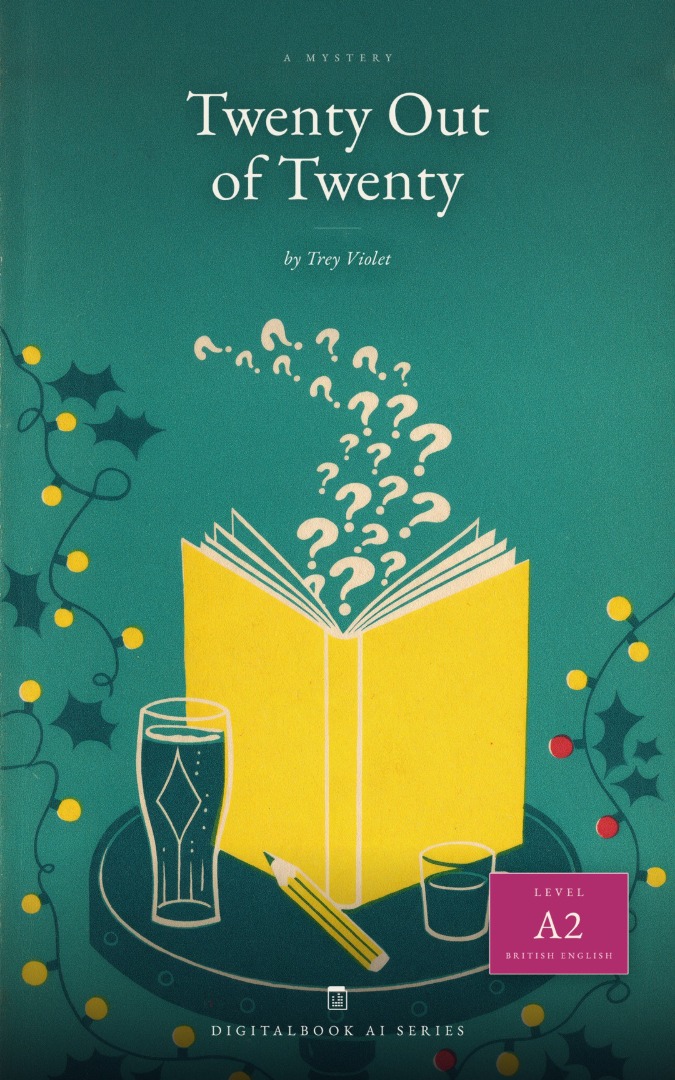
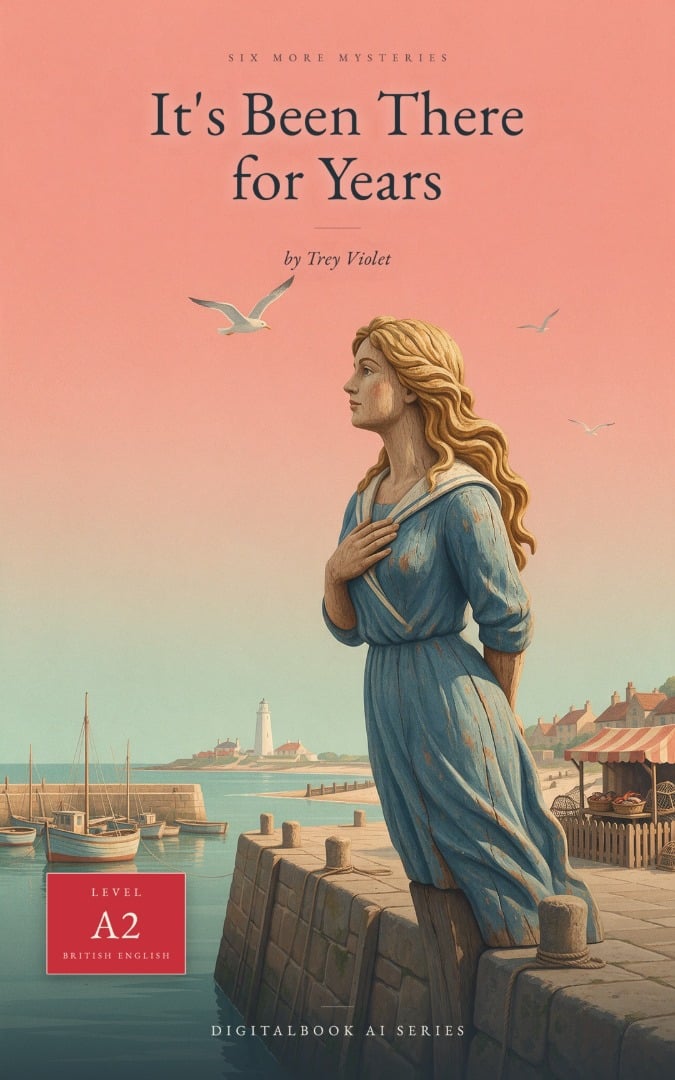
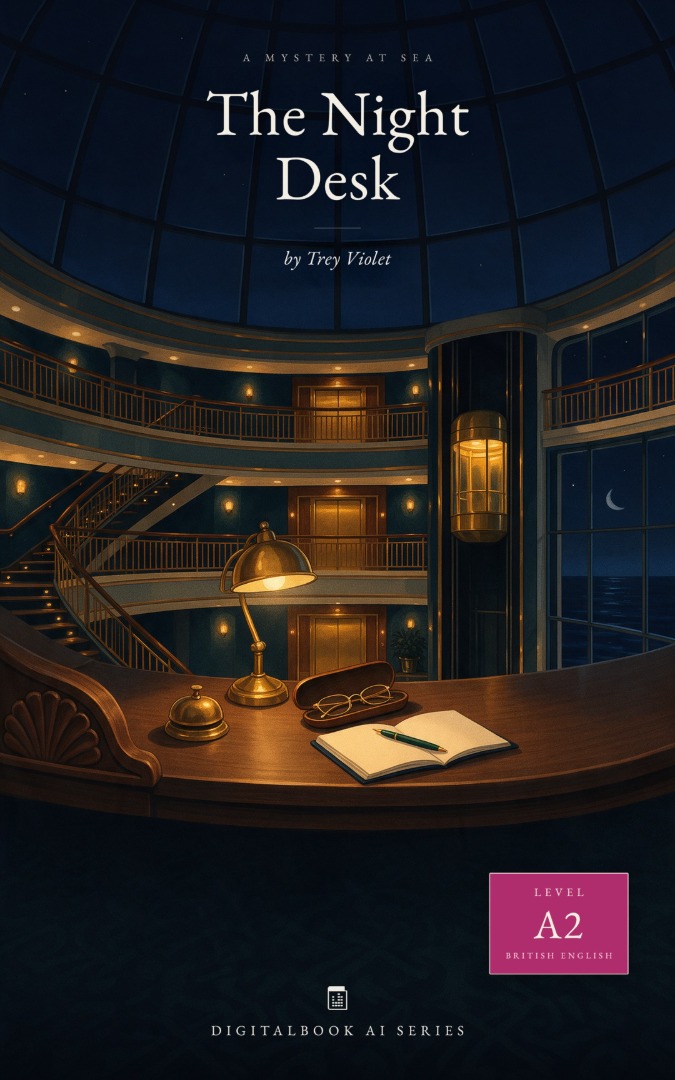
Twenty Out of Twenty practises steps 7 to 12 again in one mystery, plus a few / a little and adverbs like quickly. After that, It’s Been There for Years or The Night Desk take you to the top of A2: the present perfect with for and since, will or going to, and relative clauses (who, which, where).
B1 grammar (intermediate): steps 13 to 18
The six Off the Timetable stories are about journeys that don’t go to plan, about 16 minutes each. Each story is $1.99 to listen and read, or $0.99 as an ebook.
Show steps 13 to 18 ▾
Future forms
For arrangements, decisions, plans, and things in progress at a time in the future.
- I’m flying at ten past seven.
- Then I’ll take the train.
used to
For things that were true or happened often in the past, but not now.
- I used to live here.
- Did you use to live here?
The past perfect
For something that happened before another moment in the past.
- The train had stopped at Villach in the night.
- His bag had gone with it.
The second conditional
For situations we imagine, now or in the future.
- If there were an airport, we’d fly.
- If you could live anywhere in the world, where would you live?
should have and shouldn’t have
For mistakes and regrets in the past.
- I should have bought the adapter.
- I shouldn’t have gone out without the card.

The third conditional
For a past that we imagine differently.
- If I’d left five minutes earlier, I’d have caught it.
- What would you have done if we hadn’t come?
Go further at B1
The Other Time novels follow the B1 grammar book by book. Ten Years Late for Tea: future forms, used to, the zero and first conditionals. Thirty Years Too Early: the past perfect, the passive, reported speech, the second conditional. Fifty Years at the Top: should have, wish, the third conditional.

B2 grammar (upper intermediate): steps 19 to 24
The six One Front Door stories are short mysteries in one building of flats in Bristol, about 19 minutes each. Each story is $1.99 to listen and read, or $0.99 as an ebook.
Show steps 19 to 24 ▾
can’t have, could have, must have been
To guess what happened in the past, from the evidence.
- Then the cat could have done it.
- A cat can’t have opened a drawer.
The passive in all tenses
When the action matters more than who did it, or we don’t know who did it.
- It’s being used while we’re asleep.
- In the morning the bike had been moved again.
stop, remember, try + -ing or to
Some verbs change their meaning with -ing or to.
- I stop to listen for her.
- She always remembered to put the light on.
there’s no point, it’s no use, it’s not worth + -ing
To say that an action won’t help.
- There’s no point complaining to the agency.
- At my age, it’s no use lying in bed waiting for sleep.
have something done
When someone else does a job for you.
- I can’t even afford to have my hair done.
- He has them delivered on Friday afternoon.
It’s said to… and other ways to hedge
To report what people say, without saying it’s true.
- It’s said to have been empty for six years.
- It’s thought to be worth a fortune.
Go further at B2
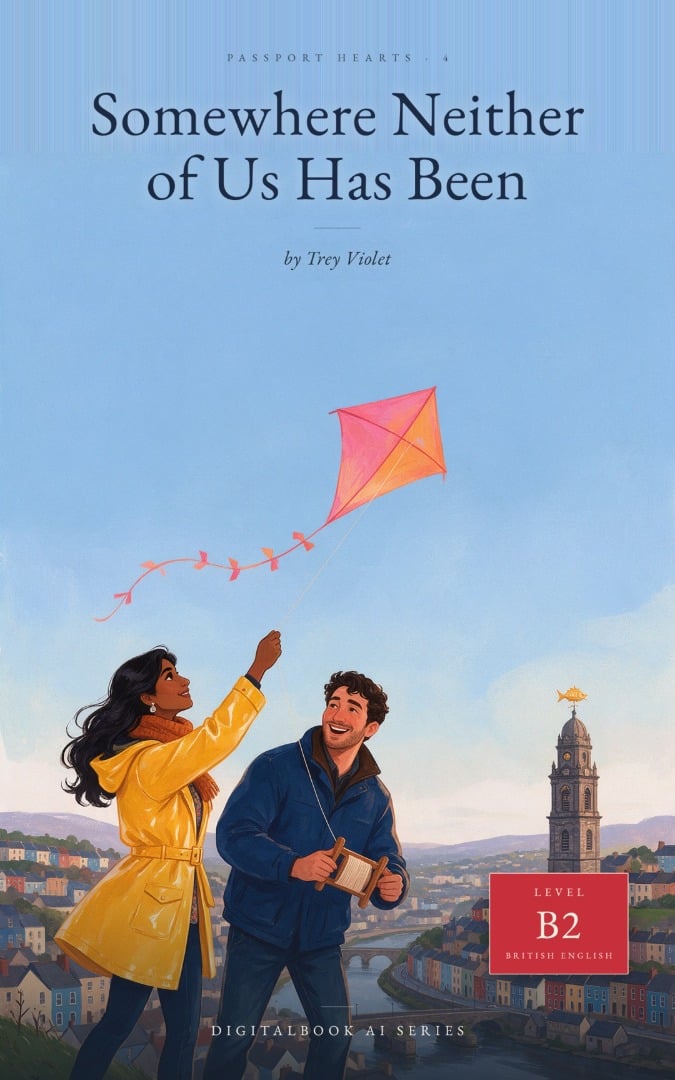
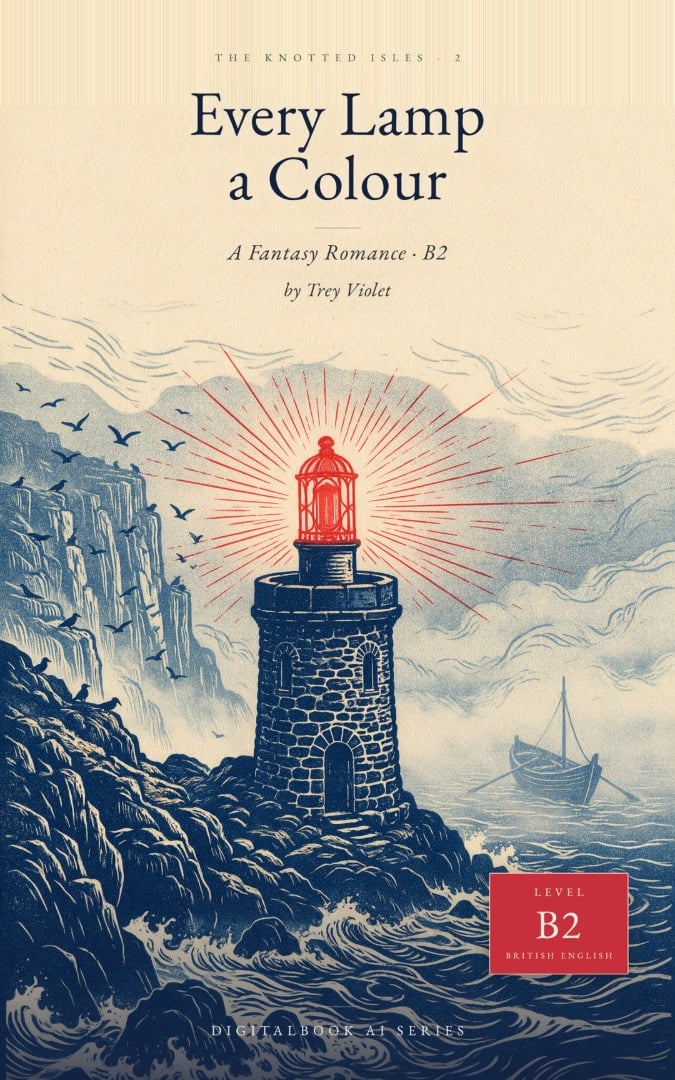
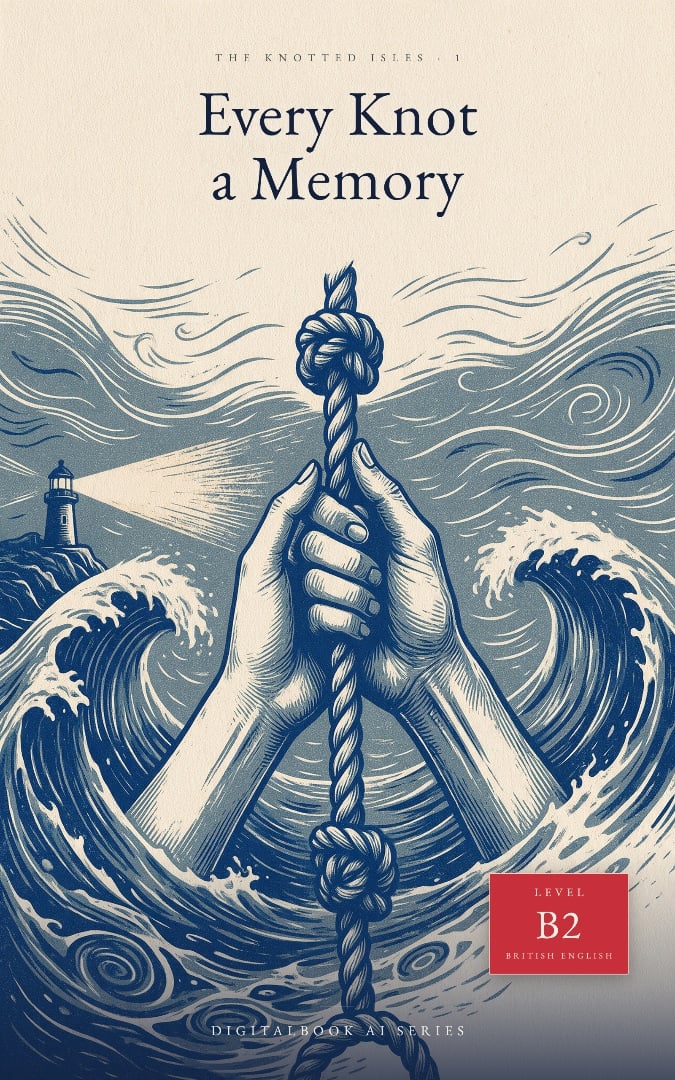
Somewhere Neither of Us Has Been: the past perfect continuous, would and used to, reporting verbs. Every Lamp a Colour: sentences with It was… that and What happened was…, inversion (Never had…), there’s no point. Every Knot a Memory: have something done, seem / appear / tend to, emphatic do.
How to use the grammar path
- Start at your level. If the step 1 story feels easy, jump to A2, B1 or B2. Not sure? The free novel The Blue Suitcase (A2) is a good test: if you can follow it, start at step 7.
- Listen and read at the same time. The text is on screen as you listen, so you hear how the grammar sounds in real sentences.
- Then read the guide. Each story’s ebook has a short guide to its grammar point: the form, examples from the story, useful words and phrases, and a quick check with answers.
- Listen again a day later. You’ll notice the grammar point in the story, and remember it better.
- Move on when it feels natural. Every story is complete on its own, so you can skip a step you already know, or come back to one later.
For free grammar practice books to use alongside the stories, see free English grammar books. For more stories at every level, see short stories for English learners.
Questions about learning English grammar in order
In what order should I learn English grammar?
Start with the present simple and continuous, can, and the past simple (A1). Then should, will and might, comparatives, the first conditional and the present perfect (A2). Then future forms, used to, the past perfect and the second and third conditionals (B1). Then past modals, the passive and more advanced structures (B2). Our 24 steps follow this order, with a short story for each step.
Is this the official CEFR order?
It is our path through the grammar. Most courses teach these points at about these levels, but some, like the present perfect or the passive, appear at different levels in different books.
Do I have to do every step?
No. Every story is complete on its own. Start at your level, skip a point you already know, and come back to any step later.
What’s in each story’s ebook?
The story and a short guide to its grammar point: the form, examples from the story, useful words and phrases, and a quick check with answers. The audiobook has the story narrated in British English, with the text on screen as you listen.
How much do the stories cost?
The A1 and A2 stories are $0.99 to listen and read, or $0.49 as an ebook. The B1 and B2 stories are $1.99, or $0.99 as an ebook. Each one has a free sample, and The Blue Suitcase (A2) is completely free.
Also on the blog: Free English grammar books · Short stories for English learners · Graded readers for English learners · Read and listen at the same time
Science Fiction and Fantasy for English Learners: 7 Graded Novels (B1–C1)
Science fiction and fantasy for English learners from B1 to C1: the Other Time time-travel series, the Knotted Isles fantasy novels and a near-future mystery, to read and listen to.

Love Stories for English Learners: 14 Romances to Read and Listen To (A2–C1)
Love stories for English learners from A2 to C1: the Passport Hearts short stories and novels, three fantasy romances and a C1 love story, to read and listen to. From $0.99.
Mystery Stories for English Learners: 23 Graded Mysteries from A1 to C1
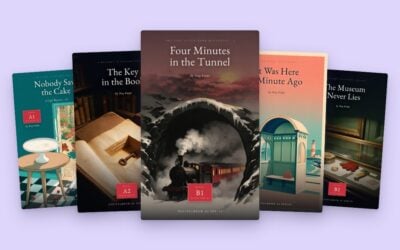
The best mystery stories for English learners, from A1 to B2: cosy café puzzles, short mysteries, Victorian detectives and whodunits to read and listen to.