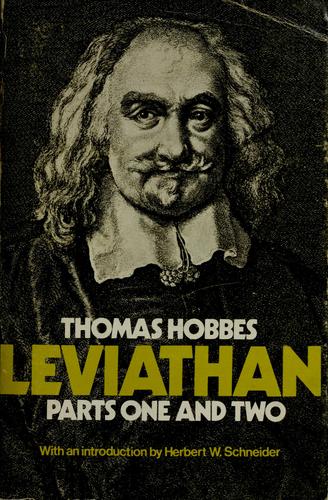
Leviathan (Books I and II)

Leviathan (Books I and II)

oleh Thomas Hobbes
Buka sebagai podcast
  • Harga: US$0,00
  • Penyedia: Librivox
  • Bahasa: 
    English
  • Genre: 
    History / World
  • Narator: 
    Anna Simon
  • Terbit: 1651
  • Peringkat: 
Leviathan, or The Matter, Forme and Power of a Common Wealth Ecclesiasticall and Civil, commonly called Leviathan, is a book written in 1651 by Thomas Hobbes. It is titled after the biblical Leviathan. The book concerns the structure of society (as represented figuratively by the frontispiece, showing the state giant made up of individuals), as is evidenced by the full title. In the book, Thomas Hobbes argues for a social contract and rule by a sovereign. Influenced by the English Civil War, Hobbes wrote that chaos or civil war - situations identified with a state of nature and the famous motto Bellum omnium contra omnes ("the war of all against all") - could only be averted by strong central government. He thus denied any right of rebellion toward the social contract. However, Hobbes did discuss the possible dissolution of the State. Since the social contract was made to institute a state that would provide for the "peace and defense" of the people, the contract would become void as soon as the government no longer protected its citizens. By virtue of this fact, man would automatically return to the state of nature until a new contract is made. Summary from Wikipedia.

Bab11 j 33 mnt

01
Introduction
08:28
--:--
Unduh
02
I - Of Sense
04:46
--:--
Unduh
03
II - Of Imagination
13:43
--:--
Unduh
04
III - Of the Consequence or Train of Imaginations
12:15
--:--
Unduh
05
IV - Of Speech
23:39
--:--
Unduh
06
V - Of Reason and Science
15:21
--:--
Unduh
07
VI - Of the Interior Beginnings of Voluntary Motions, Commonly Called the Passions; and the Speeches by Which They are Expressed
23:50
--:--
Unduh
08
VII - Of the Ends or Resolutions of Discourse
10:04
--:--
Unduh
09
VIII - Of the Virtues Commonly Called Intellectual; and Their Contrary Defects
24:20
--:--
Unduh
10
IX - Of the Several Subjects of Knowledge
05:34
--:--
Unduh
11
X - Of Power, Worth, Dignity, Honour and Worthiness
22:20
--:--
Unduh
12
XI - Of the Difference of Manners
17:21
--:--
Unduh
13
XII - Of Religion
28:07
--:--
Unduh
14
XIII - Of the Natural Condition of Mankind as Concerning Their Felicity and Misery
14:03
--:--
Unduh
15
XIV - Of the First and Second Natural Laws, and of Contracts
33:54
--:--
Unduh
16
XV - Of Other Laws of Nature
41:51
--:--
Unduh
17
XVI - Of Persons, Authors, and Things Personated
13:52
--:--
Unduh
18
XVII - Of the Causes, Generation, and Definition of a Commonwealth
10:50
--:--
Unduh
19
XVIII - Of the Rights of Sovereigns by Institution
21:05
--:--
Unduh
20
XIX - Of the Several Kinds of Commonwealth by Institution, and of Succession to the Sovereign Power
24:50
--:--
Unduh
21
XX - Of Dominion Paternal and Despotical
20:50
--:--
Unduh
22
XXI - Of the Liberty of Subjects
24:15
--:--
Unduh
23
XXII - Of Systems Subject, Political and Private
30:41
--:--
Unduh
24
XXIII - Of the Public Ministers of Sovereign Power
10:22
--:--
Unduh
25
XXIV - Of the Nutrition and Procreation of a Commonwealth
14:10
--:--
Unduh
26
XXV - Of Counsel
18:20
--:--
Unduh
27
XXVI - Of Civil Laws
46:43
--:--
Unduh
28
Of Crimes, Excuses, and Extenuations
43:45
--:--
Unduh
29
XXVIII - Of Punishments and Rewards
21:31
--:--
Unduh
30
XXIX - Of Those Things that Weaken or Tend to the Dissolution of a Commonwealth
28:05
--:--
Unduh
31
XXX - Of the Office of the Sovereign Representative
37:12
--:--
Unduh
32
XXXI - Of the Kingdom of God by Nature
27:10
--:--
Unduh

Ulasan

Masuk untuk menulis ulasan